Monday, July 18, 2011

More than 50% of Parents Use Facebook to Spy On Their Kids

More than 50% of Parents Use Facebook to Spy On Their Kids  

By 

The fears of a generation have been confirmed, as a new survey reveals that more than 50% of parents use social media as a way of spying on their children—and that even more would do so if they knew how.

The survey of 2,000 British parents, carried out by OnePoll, found that 55% of respondents use social media to track their kids' online activities, with a further 5% admitting that, if they knew how to do the same thing, they would.

Furthermore, 11% of those polled admit they created a Facebook profile purely to track their children, with 13% saying that they have logged onto friends' accounts to check up on their children, some doing so after attempting to friend their offspring and being rejected—15% of those polled have tried to friend their kids on Facebook, with 4% of them getting rejected.
The results of the survey are likely depressing to the youth of the U.K., but can't be that surprising; social media has long been considered an easy way of keeping track of people, after all—so much so that the Onion has already revealed the true origins of Facebook:


Friday, July 15, 2011

Report: Unauthorized phone charges cost Americans $2 billion a year

Report: Unauthorized phone charges cost Americans $2 billion a year
A key Senate chairman says Congress needs to pass legislation to protect customers from unauthorized third-party charges on their phone bills because the telephone industry has failed to prevent the practice.

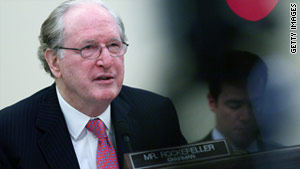
Sen. Jay Rockefeller, D-West Virginia, said a one-year study by the Commerce, Science and Transportation Committee shows about $2 billion a year in "mystery fees" show up on the landline phone bills of Americans, a problem known as cramming.

In a Wednesday hearing, Rockefeller asked an industry representative why major companies like AT&T haven't stopped unauthorized third-party charges from going onto their customers' phone bills.

"It's illegal, it's wrong, it's scamming," Rockefeller said. "Why haven't you cleaned up your act?"

"The industry has taken significant steps," replied Walter McCormick, president and CEO of the U.S. Telecom Association. "Even the report that you issued today indicates that there has been improvement, but it remains a very, very significant, very pervasive problem."

Phone companies such as AT&T, Verizon and Qwest do not have a process to determine if the charges were authorized by their customers.

The third-party billing system was a result of the AT&T divestiture when the FCC required companies to bill and collect for companies that provided long-distance or specialized services, McCormick said. It's no longer legally required, but many people like the single invoice system, he said.

The Commerce Committee's report says phone companies receive a small fee -- often just a dollar or two -- for allowing charges from third-party vendors to appear on their bills. But due to the large number of customers the charges eventually add up.

AT&T, Verizon and Qwest made $650 million during the past five years, according to the report.

The state of Illinois has brought a number of lawsuits to fight cramming. Attorney General Lisa Madigan told the panel people are unaware their phone numbers can be charged almost like a credit card and her investigations indicate customers are not even getting services in return.

"My office has yet to see a legitimate third-party charge on a bill," said Madigan, who added most customers don't detect the charges on their bills.

When third-party vendors are contacted they claim the charges were authorized by customers and they often say they have audio recordings of the customer giving the OK, Madigan said.

However, when her office obtained audio recordings, the voices turned out not to belong to the consumers who were billed, she said. She called for federal and state laws banning the billing practice.
A Georgia woman who handles accounts for 32 quick-service restaurants told the committee about her personal experience involving cramming.

Susan Eppley said she found noticeable differences in the AT&T bills for the various restaurants and that she called AT&T. According to Eppley, an AT&T representative explained the charges were from third-party vendors and that "customers were responsible for blocking such third-party charges."

Eppley said she called the third-party company and was told Eppley's company had OK'd the charges and there was an audio recording to back that up. Eppley asked to hear it but the company never provided the audio recording.

Ultimately, the company refunded all the money it had charged the restaurants.

Eppley said she spent about 15 hours resolving the issues and also setting up blocks on accounts to prevent future cramming. She said she was particularly upset the bonuses of restaurant employees could be adversely affected if their stores did not meet their financial targets.

Rockefeller praised Eppley, calling her a bulldog for her determined efforts.

David Spofford, founder of a communications expense management company in Virginia called Xigo, also testified before the committee.

A review of three years' worth of bills for about 200 clients showed 40,000 instances of cramming, Spofford said.

The average charge was $18 a month, he said. Many businesses would not expend the manpower necessary to find the unauthorized charges and stop them, he said.

His company has identified several major third-party billing consolidators, Spofford said, but they bill under about 600 names, which he theorized was a method to avoid detection.

According to Spofford, the descriptions for the services include voicemail, directory services and web hosting. He said in 99% of the cases the services had not been authorized and the customers were not receiving the services.

Sen. Claire McCaskill, D-Missouri, expressed shock companies were able to bill to a phone number without proving they have authorization from the account holder.

McCaskill said phone companies should follow the example of credit card companies and add identifying PIN numbers to all customer accounts.

McCormick, the industry representative, said he would discuss the PIN idea with members of his association.


Sen. Jay Rockefeller, D-West Virginia, says a law protecting phone customers from unauthorized charges is needed.

Thursday, July 14, 2011

Chrysler Employees Caught Drinking, Smoking During Lunch Break (Again)

Chrysler Employees Caught Drinking, Smoking During Lunch Break (Again)


If this story sounds familiar to you, it's because something very similar happened just ten months ago. Chrysler employees at the Jefferson North Plant in Detroit were busted for drinking beer during their lunch breaks, and the automaker subsequently fired 13 of the workers involved.

Now, the same behavior has been observed at Chrysler's Trenton Engine Plant. The news crew at FOX 2 Detroit investigated many tips sent in from workers at the Trenton plant, citing that employees were spending their lunch breaks drinking and smoking (and we aren't talking about cigarettes) at a nearby park.

When FOX 2 showed the investigation to Chrysler, Scott Garberding, the automaker's Senior Vice President of Manufacturing, said that he was "both hurt and angered" over what the cameras captured, adding:

"The employees that we identify, as soon as we understand who they are, will be suspended indefinitely without pay and anybody else involved will be dealt with swiftly. It's very frustrating to us, we take it very seriously."


Link to the Video


http://autos.aol.com/article/chrysler-employees-drinking-smoking/?icid=maing-grid7|main5|dl1|sec1_lnk2|77822

Wednesday, July 13, 2011

How to Really Delete Your Files

What Really Happens When You Press 'Delete'
Tara Taghizadeh

Back in 2000, Sir Paul McCartney's bank data was left on a merchant bank's computer. The machine was then sold without the files or drive being wiped clean. The data was then discovered, and the story ended up all over the news about how this particular bank and possibly others like it were not taking precautions to erase data on old computers, which were later sold or donated.

Forgetting to delete pertinent information from any hard drive is worrisome. Copy machines also pose risks. According to published reports, most copiers installed since 2002 have hard drives that save images of all copied documents. When these machines are then sold or discarded, the stored information, which can include private information such as medical records, frequently remain intact.

What does "delete" mean?
Many users are still convinced that when they delete a document or file on their computer, it vanishes into thin air -- but that's hardly the case.
As "Sam," a security engineer who wishes to remain anonymous because of the nature of his job, explains: "When a user 'deletes' a file, it's not really gone. Deleted files are sent to the Trash folder. At this point, files can still be recovered." However, even if the Trash folder is emptied, it doesn’t mean the file has disappeared completely. "But the longer a deleted file is left on a drive, the greater the chance the file cannot be recovered," Sam says.

Everyday PC maintenance
There are a number of programs out there that help ensure that your deleted files are really deleted. In addition to guarding your privacy by removing traces of your Internet browsing history and files and programs you have used, AOL's Computer Checkup cleans registries, removes clutter by clearing out temporary files, and helps solve the problem of a fragmented hard drive by rearranging data so it can be accessed more quickly.
If you have accidentally deleted files, Computer Checkup Premium also offers an "undelete" function.

Formatting and disk wipe
Then there are times when you really do need to permanently delete everything. If you are in the process of donating or selling your computer, or if you have sensitive information stored on it which you wish to be deleted permanently (such as medical information, bank or legal documents, or Social Security numbers), tech experts recommend reformatting your hard drive or performing a disk wipe.
According to The Tech FAQ, "Formatting the hard drive or any of its partitions will completely erase all data that is present."
A thorough "disk wipe" will essentially overwrite your hard drive to the point where recovery is impossible. As "Sam" explains, "When the U.S. Government wants to delete information from an entire hard drive, it employs the Department of Defense disk wipe, which means the entire drive has its data overwritten with a random pattern of zeros and ones (binary data) three times. At this point, any data on the hard drive is considered unrecoverable. In some instances, the platters are removed from the hard drive and dipped in caustic acid -- referred to as 'erase by physical destruction.'"
Users can (and should) erase the hard drives of their old computers so their data cannot be found by anyone else (think Paul McCartney). One program "Sam" and other tech experts recommend is Darik's Boot and Nuke, which will delete the contents of a hard drive with certainty.

Consequences of not deleting files
Sensitive information carelessly stored on computers can lead to identity theft, and also harks the growing need for computer forensics.
In 2007, for example, a forensics expert found that the new publisher of the Minneapolis Star Tribune had transferred sensitive information over from his St. Paul Pioneer Press computer, where he previously worked. In another case, the insurer Health Net was recently sued as a result of a missing computer hard drive that stored the medical records of several thousand customers.
Deleting files from your computer is similar to shredding documents: Store what you need, and digitally "shred" those you don't.

Monday, July 11, 2011

LinkedIn passes Myspace as No. 2 U.S. social network

LinkedIn passes Myspace as No. 2 U.S. social network
By Brandon Griggs


Despite new ownership and an injection of Justin Timberlake celebrity cachet, the bad news just keeps coming for Myspace.

LinkedIn, the online network geared to professionals, has surpassed slumping Myspace as the second-most popular online social network in the U.S. in terms of Web traffic, behind Facebook.

LinkedIn had 33.9 million unique visitors in June, an increase of about half a million from the month before, according to new data from comScore, the Internet analytics firm. By contrast, fewer than 33.5 million Americans visited Myspace last month, a drop of about 1.4 million U.S. visitors from May.

The numbers don't tell the whole story -- Myspace still has anestimated 130 million active users, compared with roughly 115 million for LinkedIn -- but it's another symbolic blow to the once-dominant social network, which is struggling to reinvent itself.

U.S. traffic to Myspace is half of what it was in June 2010, when the site had more than 66 million unique visitors, according to comScore. Myspace still leads third-place Twitter, which had 30.6 million visitors last month, although at their current rates, Twitter will eclipse Myspace in the next few months.

By comparison, Facebook, social networking's ever-expanding behemoth, had 160.8 million unique visitors in June.

LinkedIn was surging even before the company went public in a splashy and successful debut in May. The social network has been adding about a million members each week, CEO Jeff Weiner said in March.

A new survey sheds some light on how are people using LinkedIn, which lets members post résumés, search for jobs and network with other professionals in their fields.

According to a survey of 500 LinkedIn users by Lab42, a market-research firm, 35% of members visit the site daily, and 42% update their profiles regularly. Perhaps not surprisingly, the survey found that top-level executives and entry-level workers use LinkedIn differently: The younger members use the site mostly to find jobs, while the senior executives use it for networking and promoting their businesses.

More than half of LinkedIn members are based outside the U.S.

Saturday, July 9, 2011

The Success of Pawn Stars

Rick Harrison of 'Pawn Stars' spills success secrets
By Linda Childers


Rick Harrison knows a deal and a steal when he sees one.
Ever since he was a young boy, he's had the uncanny ability to make money selling other people's unwanted items. Today, that ability has made him a mint and turned him into one of TVs hottest reality stars.
The 43-year-old pawn shop owner has achieved a cult following as part of the cast of the reality show, ''Pawn Stars,'' on The History Channel.
Along with his father, Richard "The Old Man" Harrison, his son, Corey "Big Hoss" Harrison" and family friend Austin "Chumlee" Russell, Harrison gives viewers a behind-the-scenes peek into his Las Vegas business the Gold & Silver Pawn Shop. In the process, he educates audiences on the history behind many of the unique items sold in the store.
Debuting in 2009, ''Pawn Stars'' is now the History Channel's top-rated show, and one of the highest-rated shows on cable television, averaging 5 million viewers per week. This month, Harrison signed a new, record-breaking 80-episode renewal contract for four more seasons of ''Pawn Stars.'' He's also released his first book, ''License to Pawn: Deals, Steals and My Life at the Gold and Silver'' (Hyperion).
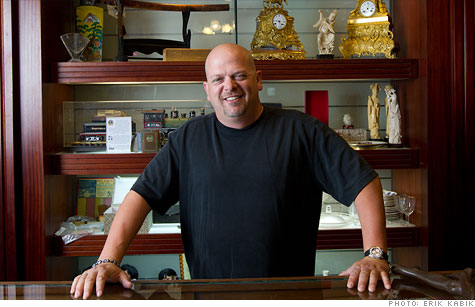
Successful pawn shop owner Rick Harrison is the star of reality show ''Pawn Stars.''

Celebrities' secret businesses

So what's the secret to his success? Harrison shares his tips on finding fame and fortune. Here are edited excerpts from the interview below.
Set yourself apart. As a small business owner with big competition, we had to figure out a way to be different. We saw an opportunity to invite people to sell their rare and unusual items at our shop, in addition to conducting our usual pawn business. Now, when the big corporate pawn shops get an item they don't recognize, they send the customer to us. "
Know how to negotiate. Never fall in love with something when you're negotiating a price. Never decide you're going to buy something because you can't live without it. Negotiating to buy an item shouldn't be an emotional process. And you should never, ever, give the first number. As a buyer, you don't want to risk coming in first with a high price.
Offer something no one else does. In the 90's, I went on eBay to buy some paddle tires for my four-wheeler ATV and couldn't find any. When I did find a manufacturer that sold them, I bought 20,000 and had no problem reselling them. So the next time you get mad when you can't find an item, realize there's a market waiting to be explored.
Treat every customer well. I tell everyone that works for me not to look down on people. If you're nice to people and take a minute to talk with them, it's good for business whether or not they buy anything. Just because they don't look like they have money doesn't mean they're poor.
Once an unkempt, elderly woman came into the pawn shop. She appeared homeless, and she insisted on seeing every piece of expensive jewelry in the store. Just when I was feeling impatient, the woman pointed at the most expensive piece of jewelry and said, "I'll take that one." Then she proceeded to pull $4,000 out of her sock to pay for it.
Embrace social media. After ''Pawn Stars'' became popular, we began selling a lot of T-shirts and swag [promotional items] in the store. A year ago, I decided that rather than having our T-shirts professionally designed, we should hold a competition on Facebook and ask our fans for design ideas. For every design we choose to go on a shirt, the winner receives $250 and a box of swag. As a result, we're receiving hundreds of design ideas, and have saved over $100,000 on producing t-shirts."
We also pay someone to do regular Facebook status and Twitter updates. Corey and Chumlee have been getting paid $1,000 a night to appear at different nightclubs. Club owners know that once they start tweeting their location for the night, hundreds of people show up to see them.

Friday, July 8, 2011

Bikini Baristas Arrested After Serious Coffee Shop Violation

Edmonds Bikini Baristas Arrested
By Brian Soergel

Police department carries out a nine-month undercover investigation, which ends when owner Carmela Panico and three employees at Java Juggs Espresso—the coffee stand's slogan is "Some Like It Hot"—are charged with prostitution and exposure.

After a ninth-month undercover investigation, the Edmonds Police Department has arrested the owner of an Edmonds espresso stand on three counts of prostitution and one count of permitting prostitution. Three employees were also arrested.

The arrest at Java Juggs Espresso, located on the corner of Highway 99 and 212th Street Southwest, involved officers posing as customers and collecting video as evidence, said Sgt. Don Anderson of the Edmonds Police Department.

Most of the violations involved employees exposing themselves to customers for large tips. Some of the violations involved physical contact with a barista in exchange for money.

The investigation began in October 2010 and ended last week with the arrest of the business owner and the three employees, on charges which include prostitution and unlawful exposure.

Among those arrested was 49-year-old Carmela Panico, a Snohomish resident who owns Java Juggs Espresso in Edmonds, as well as two others in Everett. The police determined that she joined her employees in illegal activities. She is currently out on bail.

The Edmonds Police Department is working with the Snohomish County Health Department and the City of Edmonds Code Enforcement Office to address any other business licensing or code enforcement issues that may exist with the business as it continues to operate.

NEED A WEB SITE?